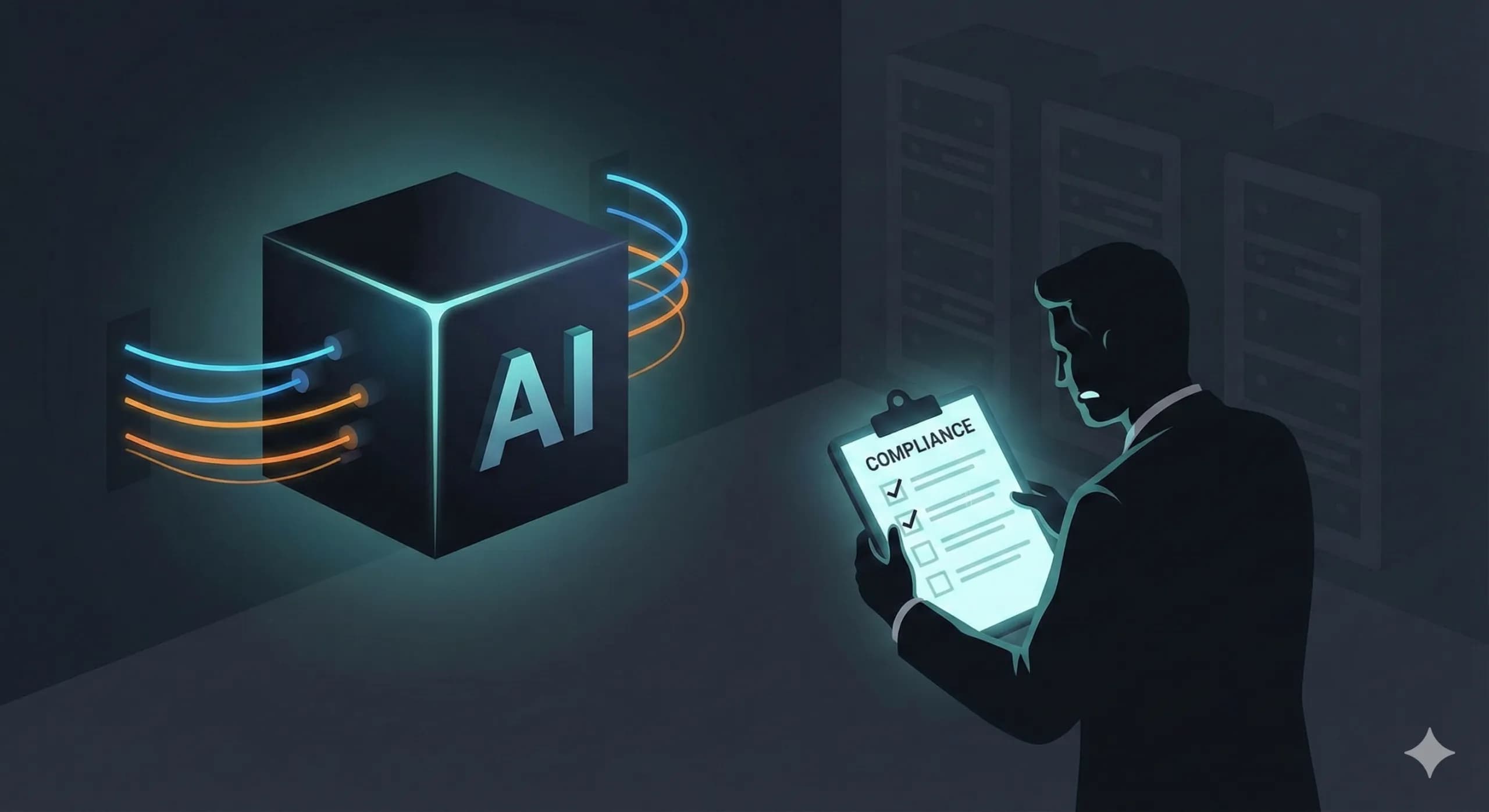

What an AI Consultant Actually Does
Most organisations think they need an AI consultant for strategy. What they actually need is someone who can implement, embed, and make AI stick.

I've taken a look at other people’s AI consultant engagements in the last 18 months and it feels like there’s a depressingly consistent pattern emerging.
Organisations launch hard with workshops, a strategy deck and a pilot project… then that project gets quietly shelved after a few months and nothing else sticks. One such business paid £40k–£120k for a document and some PowerPoint slides. Six months later, they're back where they started, except now they're cynical.
This happens because most organisations misunderstand what an AI consultant should actually do. They think they're hiring someone to write a strategy. What they actually need is someone who can implement, embed, and make AI stick in real operations.
Let me show you the difference.
The Strategy Deck Problem
Here's what typically happens when an organisation hires an AI consultant:
Week 1–2: Discovery. The consultant talks to people across the business to understand what you do and how you do it.
Week 3–4: Research and analysis. The consultant disappears, researches industry trends and starts building frameworks.
Week 5–6: Strategy presentation. It’s a 60-slide deck and the board loves it. Everyone agrees AI is important.
Week 7+: Nothing happens. The deck goes in a folder, people return to their day jobs. The AI consultant has moved on to the next client.
This model treats AI as a strategic planning exercise, whereas it’s operational capability that really needs to be designed and implemented.
You already know AI matters matters, so don’t hire someone who’s just going to tell you that. You need someone who can help you pick the right use case, design the workflow, get people using it, and make sure it sticks after they leave.

What An AI Consultant Should Actually Do
In my fractional and consulting work, I spend about 20% of my time on strategy and 80% on implementation.
Pick One High-Value Use Case
Most AI strategies try to do too much. They identify 15 potential use cases, rank them in a matrix, and recommend piloting five of them simultaneously. This fails because the organisations rarely have the capacity for it.
Instead, I help clients identify one use case that meets three criteria: genuine pain point (people complain about this weekly), measurable improvement (we'll know if it worked), and manageable scope (can be designed and tested in 4–6 weeks).
One working use case is worth more than five pilots that never launch.
Design the Workflow
Here's where most AI consultants hand-wave. They say "use AI to automate customer service" or "implement AI for content creation" and leave it there. But you can’t replace process with aspiration.
A real workflow answers: Who does what? When do they use the AI tool versus doing it manually? What happens when the AI output is wrong? How do we review quality? What gets escalated? Who owns the process?
I spend days mapping this out with the actual people who will use it, walking through real examples from last week at their desk.
The technology is the easy bit, but redesigning how humans and AI work together isn’t so simple. We have to validate that the implementation actually improves the outcome and doesn't just create new problems.
Implement With Real Users
Pilots fail when they happen in isolation. Giving a small team special access to a hypothetical implementation will only lead to lack of interest and a call for more testing.
What works is picking a real project with a real deadline and real consequences. Implement the AI-enabled workflow properly. Support the team daily for the first two weeks. Fix what breaks. Iterate based on what actually happens.
If it works, you have proof and momentum. If it doesn't work, you learn why and kill it fast. Either outcome is better than a pilot that lives in limbo.
Embed Guardrails
Every organisation worries about data security, accuracy, and compliance when it comes to AI. Fair concerns.
Most AI consultants respond with a governance framework: 40-page document, approval processes, risk matrices, compliance checklists. Nobody’s going to read that: they’ll ignore the rules entirely or never use AI at all.
Stick to simple, practical guardrails built into the workflow itself. Focus on what tools are used for which tasks, what data can be put in public AI, and who to ask if you’re not sure. Three clear rules beat a 40-page policy every time.
Train the Team to Own It
The goal of an AI consultant should be to make themselves redundant. If I've done my job properly, the organisation doesn't need me six months later because they've internalised the capability.
I typically work with a core team of 2–4 people who become the internal AI champions, spotting new use cats, designing workflows and troubleshooting problems. They learn by doing, not by watching me do it. By the time I step back, they're already running the next use case without me.

When Do You Actually Need an AI Consultant?
Not every organisation needs external help with AI.
You need one if: Your team lacks the time or experience to design and implement AI workflows safely. You've tried a few things that haven't stuck and you're not sure why. You need someone senior who can challenge assumptions and operate at both board and operational level.
You don't need one if: You have capable internal people with the time and mandate to lead this. You're still in the "reading articles and watching videos" phase. You want a strategy deck to show the board but no appetite to actually implement.
An AI consultant should be an implementation partner, not a strategy tourist. If you're not ready to implement, wait.
What Success Looks Like
Here's how you know an AI consulting engagement worked:
Three months in: 2–3 AI-enabled workflows are live and being used daily by real teams. People can explain why they're using AI for this task and what happens when it goes wrong. There's a simple process for identifying and testing new use cases.
Six months in: The organisation has embedded at least one more use case without external help. Internal champions are training others. AI is treated as a normal operational capability, not a special project.
Twelve months in: The AI consultant is gone, the capability remains, and the organisation is confidently building on what was set up.
If you're still dependent on the consultant after six months, something went wrong. If the only output is a strategy document, something definitely went wrong.
Most organisations hire an AI consultant expecting strategy. What they actually need is implementation — someone who can pick the right use case, design the workflow, embed it with real users, and transfer the capability so it sticks.
Strategy decks gather dust. Working workflows compound.
If you're evaluating AI consultants, ask them how much time they spend implementing versus presenting. If the answer is "mostly strategy," keep looking.
Ready to turn your idea into a product users actually want?
Book a free discovery call
Martin Sandhu
Fractional CTO & Product Consultant
Product & Tech Strategist helping founders and growing companies make better technology decisions.
Connect on LinkedIn