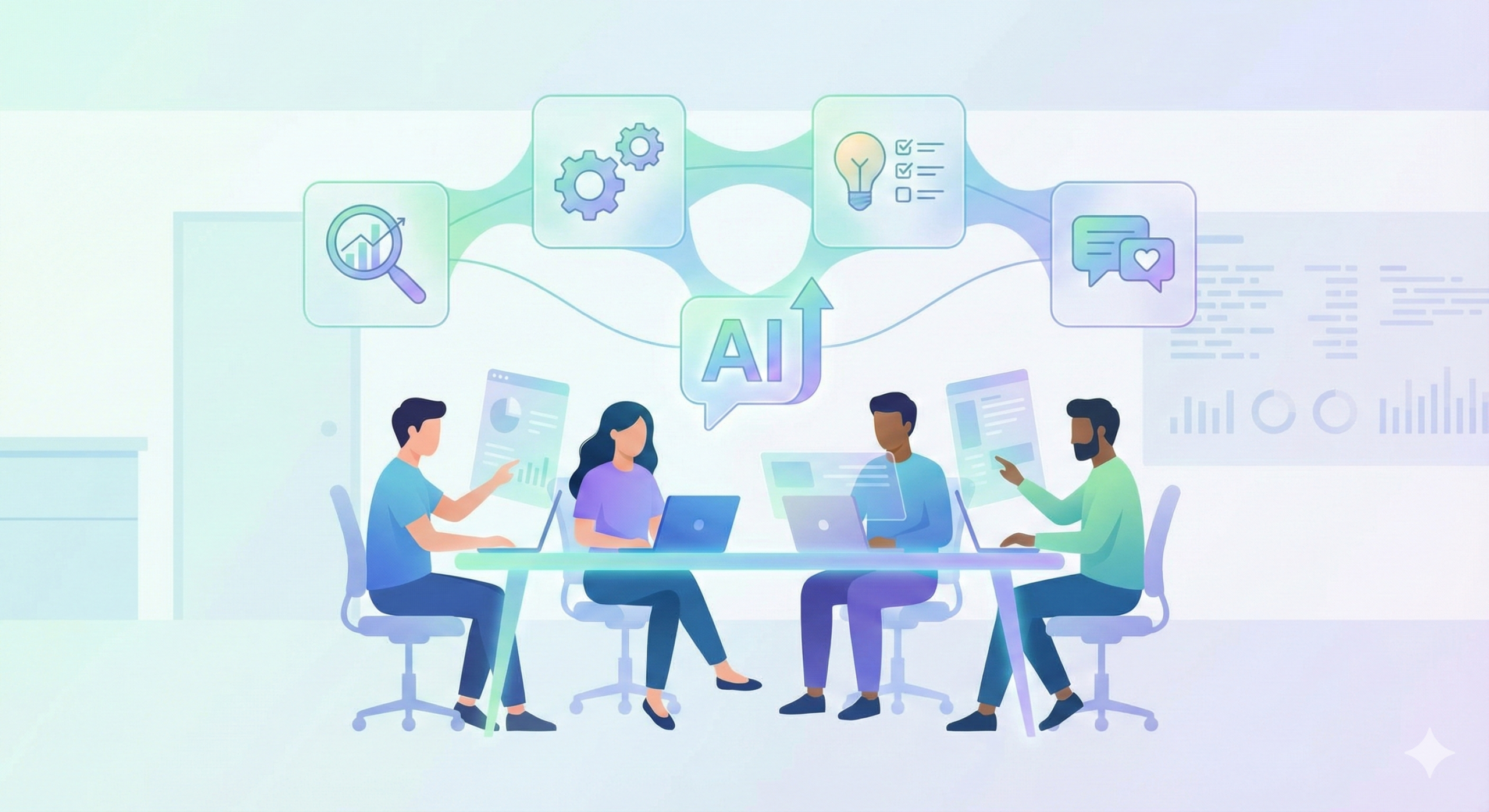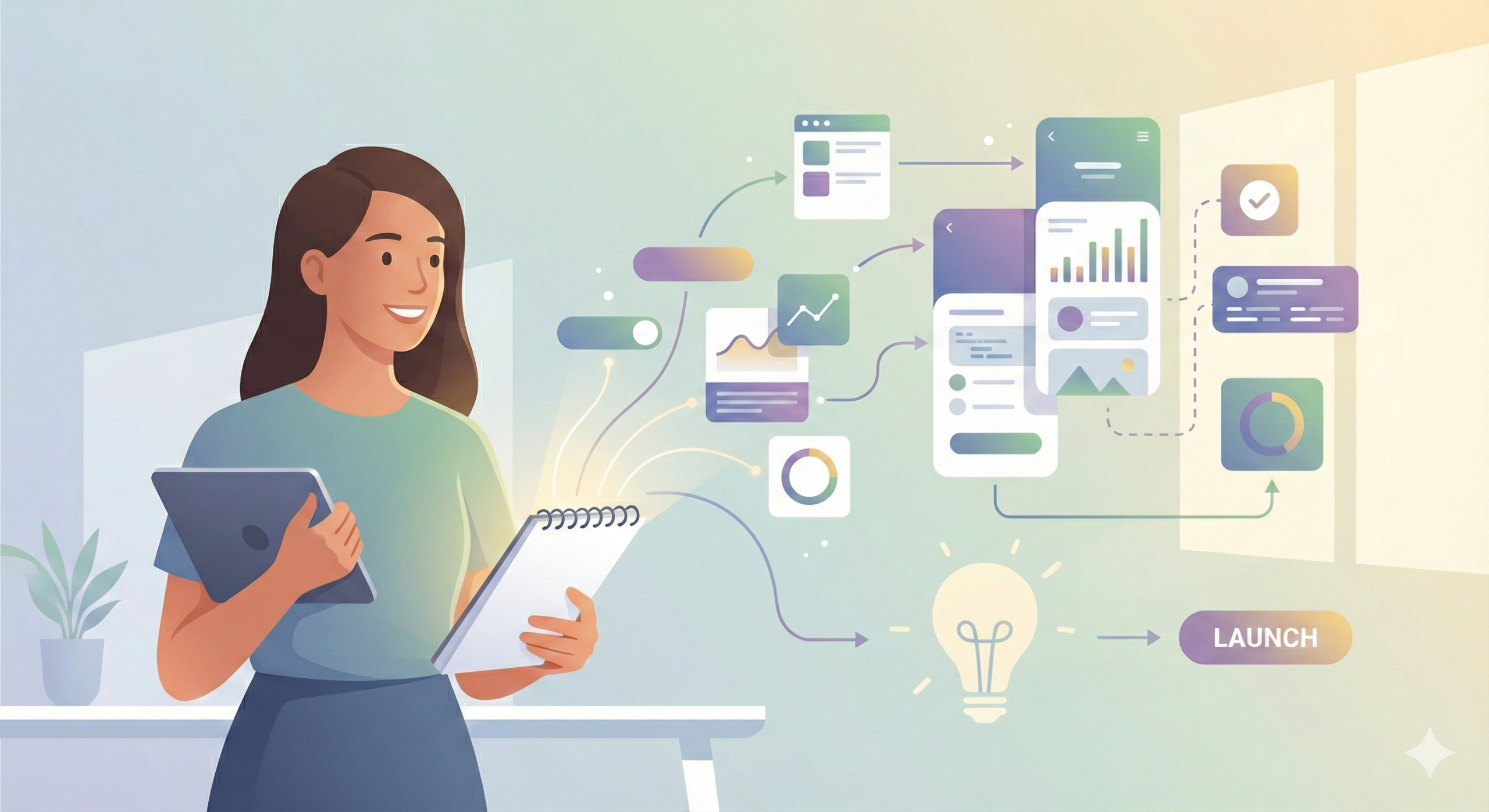
Once upon a time, “vibe coding” was a meme – the idea of more or less guessing at code and hoping the computer did something useful. In 2025, thanks to AI-assisted development, it’s a surprisingly accurate description of how some software is being built.
Tools like GitHub Copilot, Cursor, and whole AI-native IDEs can take natural language descriptions and turn them into functioning components, APIs and tests. You can sketch out a data model in plain English, and the AI will generate the schema. You can say “build a screen that lets users filter bookings by date and status” and get a working UI.
For non-technical founders, this looks like a dream: why struggle to hire engineers when you can ask an AI to build your product from a paragraph of requirements?
Reality, as always, is more nuanced.
AI makes it easier to produce code, but it doesn’t remove the need for clear thinking. If you don’t understand your users, workflows and edge cases, the model will faithfully generate a beautiful implementation of a bad idea. It will also happily produce code that works in simple cases but falls over under real-world load, security constraints or messy data.
So how can you benefit from the vibe coding era without becoming dangerously overconfident?
First, use AI to prototype, not to pretend you’re a full-stack engineer overnight. As a founder, you can absolutely use AI tools to create clickable demos, basic frontends, and small utilities. This can be incredibly helpful for communicating ideas, testing with early users, and even unblocking your own day-to-day work.
Treat these artefacts as “concept cars”, not production vehicles. They show what’s possible and help you refine requirements, but they’ll usually need refactoring or rebuilding by professionals before you scale.
Second, focus your energy on product clarity. AI thrives on good prompts. The better you can describe user journeys, data flows, and success criteria, the more useful your AI-generated prototypes will be. Invest time in writing one-page specs and mapping processes – not because AI demands documentation, but because your future team will, too.
Third, collaborate with engineers rather than bypassing them. Talented developers increasingly use AI as a co-pilot to accelerate their work. They can take your early experiments, keep what’s useful, and replace what isn’t. If you show up with a working prototype and a clear understanding of trade-offs, you’ll usually get more respect, not less.
Be transparent about what was generated and how. Don’t hand over a codebase generated by three different AI tools and pretend it’s been engineered. Ask engineers to assess risk levels: security, performance, maintainability. Accept their judgement on what needs to be rewritten.
Fourth, be careful about IP and security. When you paste proprietary logic or sensitive data into public AI tools, you may be breaching contracts or data protection obligations. Use enterprise-grade deployments where possible, and agree ground rules with your team before experimenting.
Finally, resist the temptation to equate “AI can build it” with “we should build it”. The constraint for most startups isn’t code anymore; it’s finding real demand, differentiating in the market, and running a sustainable business. If you can spin up a feature in an afternoon, so can your competitors.
The real advantage of the vibe coding era for non-technical founders isn’t cheaper code. It’s faster learning. You can get from idea to something users can react to in days rather than weeks. You can explore more options before committing. You can spend less on speculative builds and more on validated bets.
In short: use AI to lower the cost of curiosity, not to convince yourself you don’t need a solid product and engineering foundation. Vibes are great for the first sketch. Shipping, scaling and securing real products still demand more than that.